
?Have you ever needed a clear, fast-setting epoxy that actually holds up and doesn’t look like a clumsy repair?

My Quick Verdict
I like the J-B Weld Pro Size ClearWeld 5 Minute Set Epoxy because it gives me a near-instant set time without sacrificing a strong bond. It’s convenient for quick fixes and small projects where clarity matters, and I find its balance of speed and strength useful for both household and hobby work.
I also appreciate that this product is the same formula as the original J-B Weld ClearWeld but offered in two 4 oz tubes, so I get more working material and better value for frequent use. For anyone who wants clear adhesion without waiting all day, this is a solid go-to in my toolbox.
What It Is
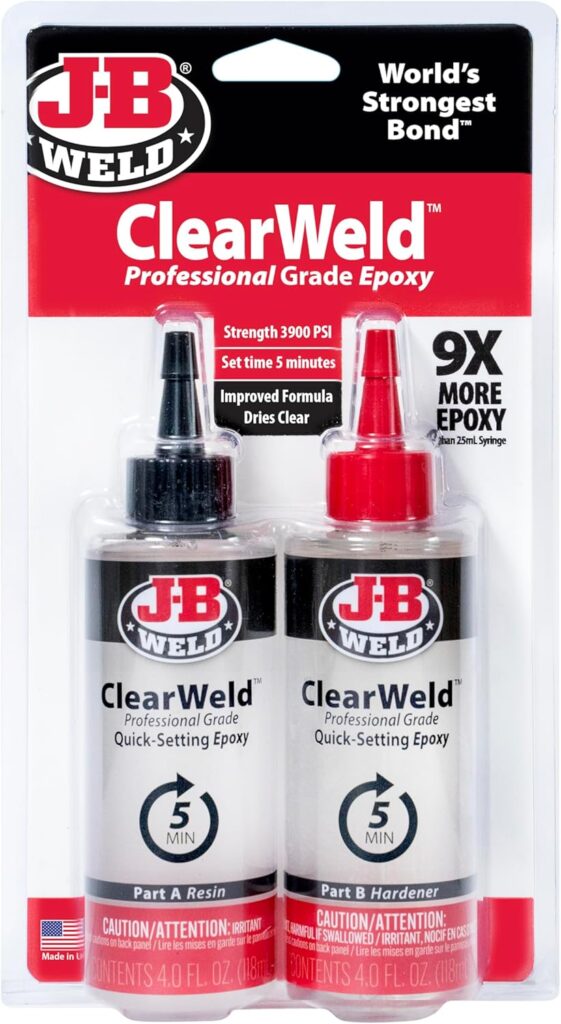
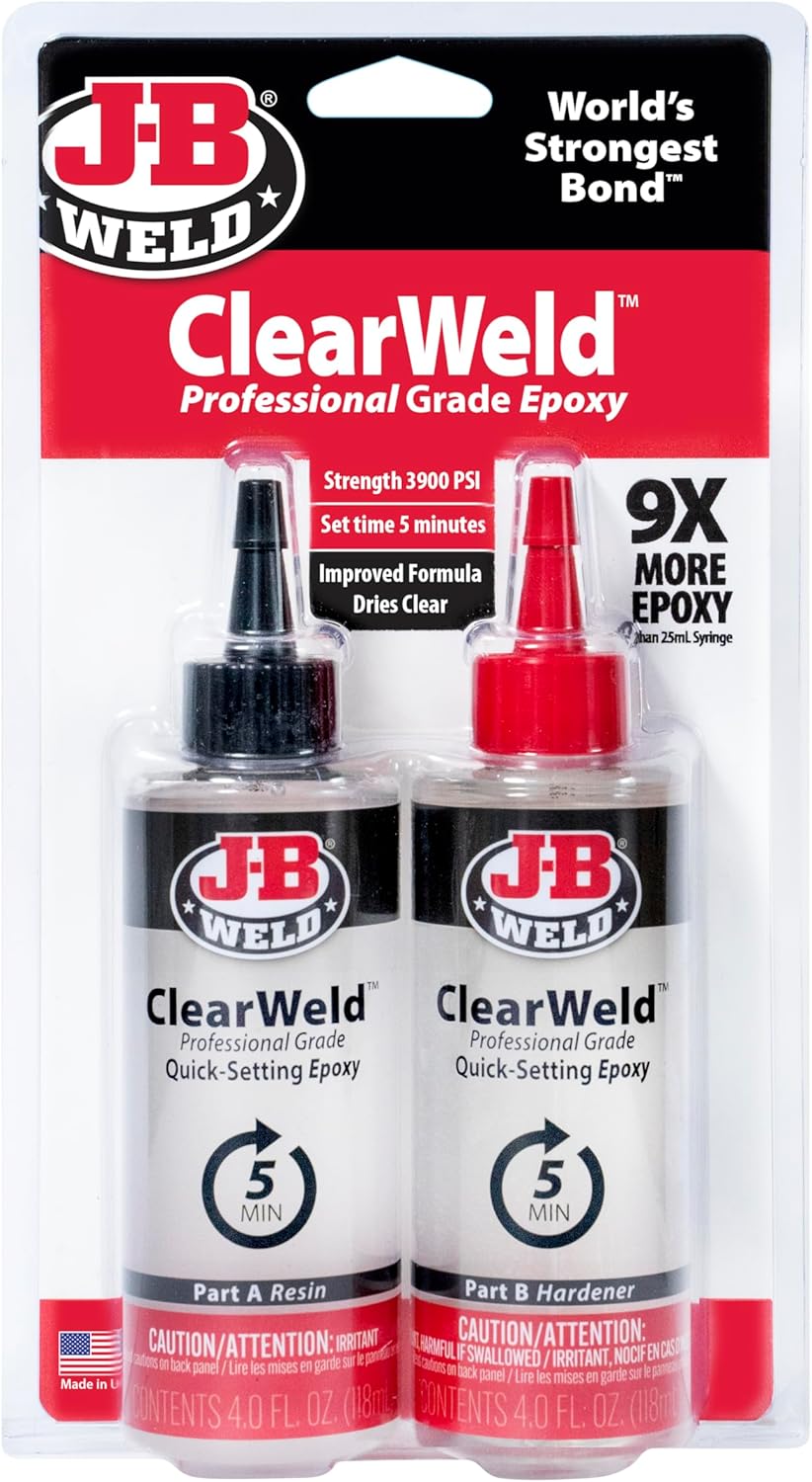
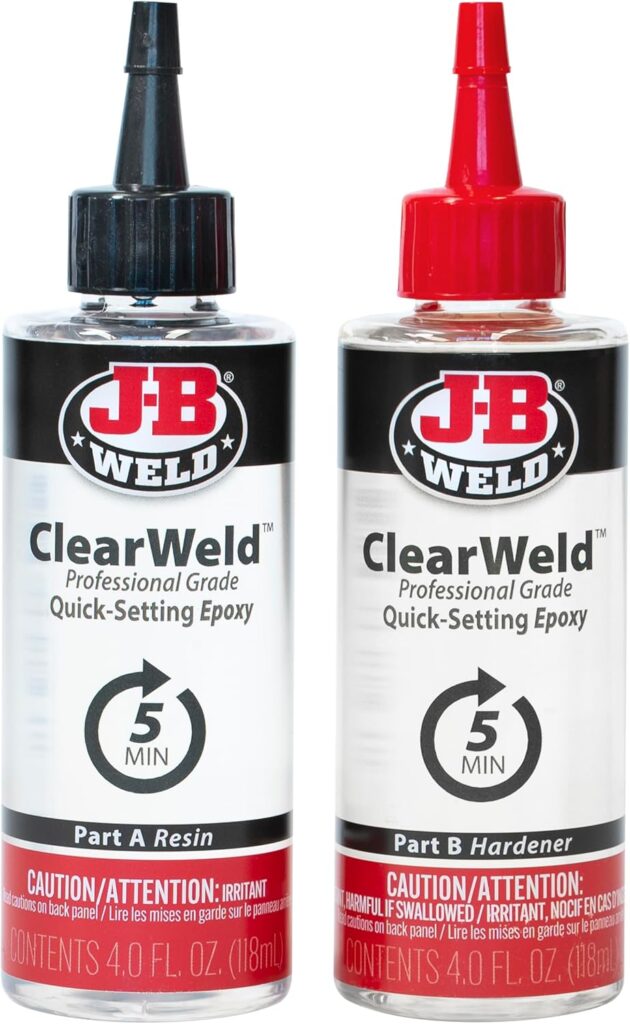
I view J-B Weld Pro Size ClearWeld 5 Minute Set Epoxy as a two-part, fast-setting epoxy adhesive that cures to a transparent finish when used correctly. It’s designed for multipurpose bonding across a wide variety of materials, including metal, glass, ceramic, wood, and many plastics.
The product ships as two 4 oz tubes—resin and hardener—meant to be mixed at a 1:1 ratio by volume. The formula emphasizes clarity and speed: it sets in about five minutes and reaches a usable cure in roughly an hour for thin applications.
Key Specifications
I made this table to give a quick, organized view of the core specs. I find that having numbers and details laid out makes it easier to plan projects and estimate how much epoxy I need.
| Attribute | Specification |
|---|---|
| Product Name | J-B Weld Pro Size ClearWeld 5 Minute Set Epoxy |
| Formula | Same formula as J-B Weld ClearWeld (two-part clear epoxy) |
| Packaging | Two 4 oz tubes (resin and hardener) |
| Mixing Ratio | 1:1 by volume |
| Initial Set Time | Approximately 5 minutes |
| Functional Cure | Approximately 1 hour (thin layers) |
| Transparency | Cures clear when less than ~15 mil thickness |
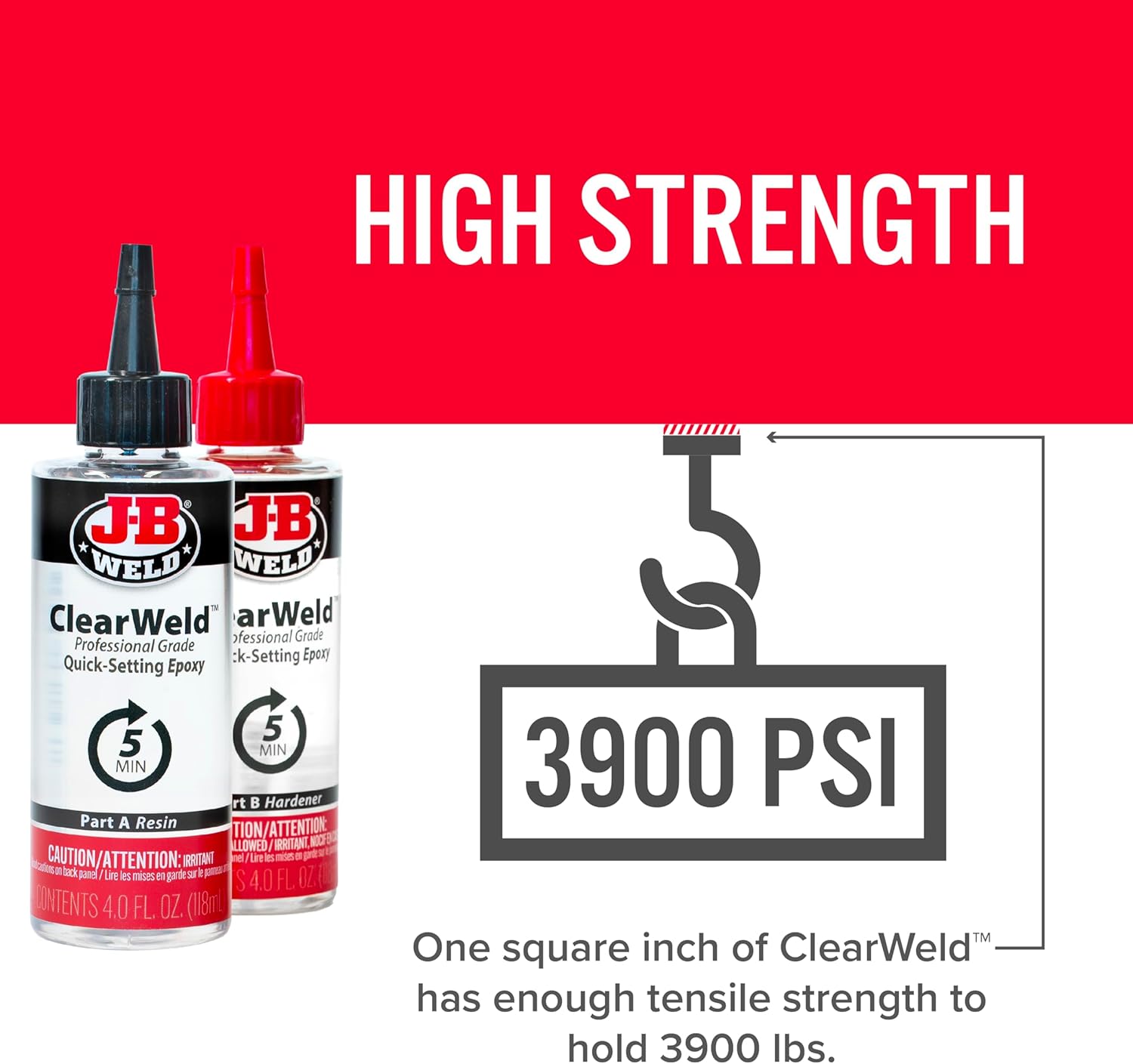
| Tensile Strength | 3900 PSI |
| Typical Surfaces | Glass, ceramic, tile, plastics, concrete, wood, metal |
| Best Use | Small-to-medium repairs, clear finishes, craft work, household fixes |
I often refer back to this table when I’m deciding whether to use this epoxy for a particular job. The 1:1 ratio and the quick set time are two features I particularly appreciate.
Packaging and First Impressions
When I opened the box, the two 4 oz tubes felt sturdy and easy to handle. The tubes are flexible enough for me to squeeze out equal amounts, and the size makes it comfortable for multiple moderate-sized repairs without committing to an industrial-sized cartridge.
I noticed that the product includes clear labeling with mixing instructions and cautions, which I like because it reduces guesswork. The consistency of each component is workable: the resin flows easily, and the hardener blends without excessive clumping when I mix properly.

Performance and Strength
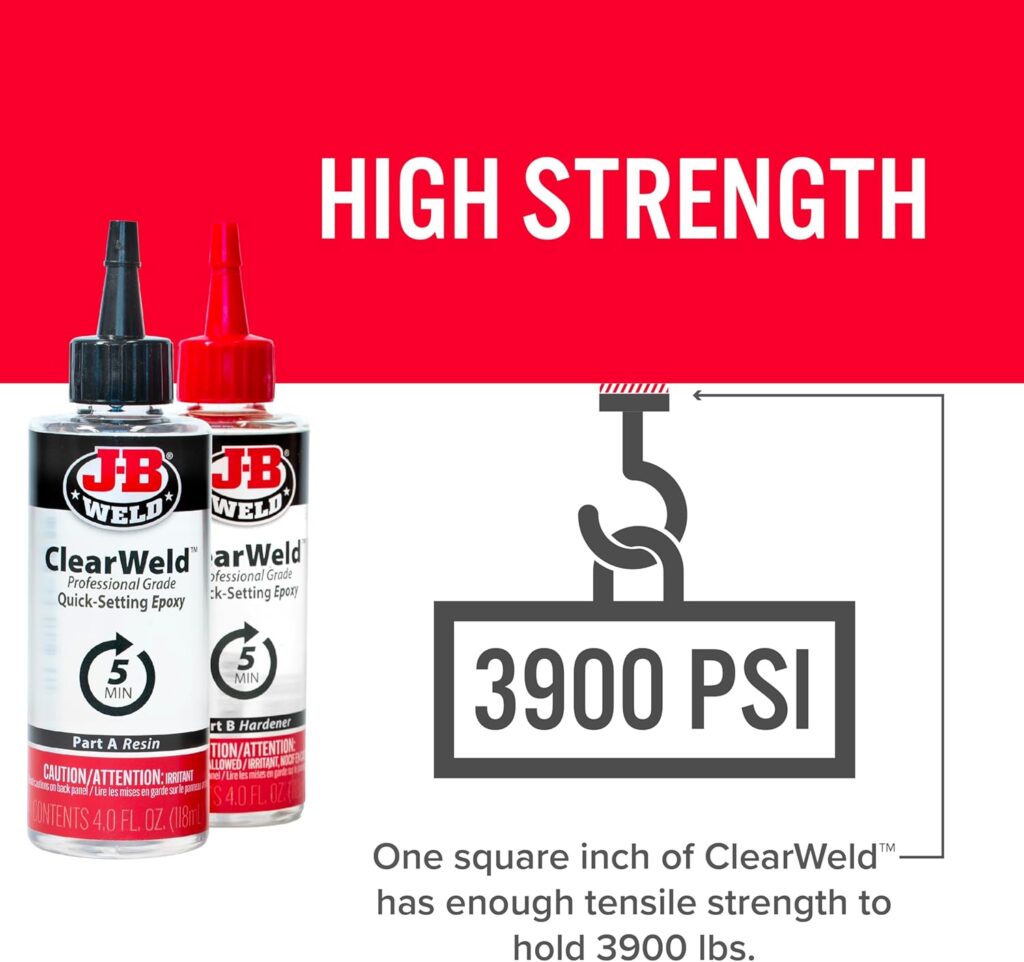
I judge epoxies by how reliably they form and maintain a bond, and J-B Weld ClearWeld Pro performs well in that regard. While it’s not a structural adhesive for heavy load-bearing steel-to-steel joints, it provides impressive tensile strength (3900 PSI) that’s more than enough for most household items and many automotive or hobby repairs.
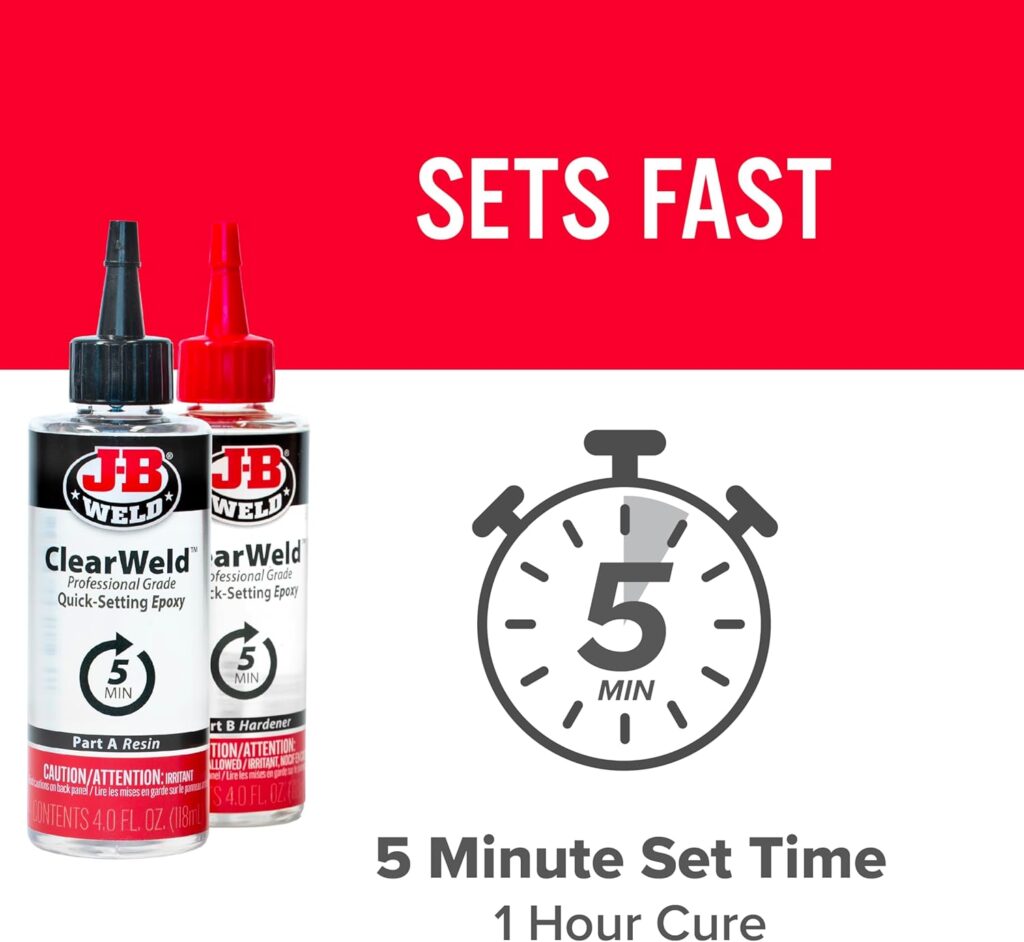
The speed of the set is one of the product’s most practical features. In many cases I can apply, align, and have a secure hold within five minutes, which saves clamps and setup time—especially helpful when I’m working alone or on quick fixes.
Setting and Curing Times
I mix at a 1:1 ratio and typically see an initial set in about five minutes, consistent with the product specs. That initial set is helpful for holding parts in place, but I don’t rely on it as the final cure—additional cure time is important for full strength.
For a functional cure, I allow roughly an hour when I’m working in thin layers. For thicker fills or areas where full mechanical strength matters, I’ll give it more time—several hours to overnight—to ensure the bond has reached its maximum integrity. Temperature and humidity will affect these times, so I account for that depending on the conditions I’m working in.
Bond Strength and Durability
The stated tensile strength of 3900 PSI is impressive for a clear, fast-setting epoxy and in my experience translates to durable bonds on many materials. I’ve used it on broken ceramic pots, glass shelves, and some metal brackets, and the repaired items held up under routine use.
Long-term durability looks good when the epoxy cures properly and the surfaces are prepared well. It resists accidental bumps and normal wear, though I’m cautious about relying on it for high-impact structural repairs without reinforcement or mechanical fastening.
Clarity and Finish
One of the main reasons I pick ClearWeld over some other epoxies is the clear finish it can provide. When applied in thin layers (under the roughly 15 mil guideline), it cures transparent and visually unobtrusive, which is ideal for glass or decorative repairs.
If I use it too thickly or trap air, the cured adhesive can show slight cloudiness or visible bubbles. I’ve found that working in thin passes and avoiding air entrapment during mixing helps preserve the glass-like appearance.
Working Time and Mixability
The working time is intentionally short because of the five-minute set—this means I have to be organized and efficient. I prep both parts, measure accurately, and have tools ready before mixing. For small projects, that’s straightforward; for larger or multi-piece assemblies, I break the work into quick steps.
Mixability is good when I follow the 1:1 ratio accurately and scrape the sides and bottom of my mixing surface. I prefer mixing on disposable paper or a plastic tray with a stir stick, and I rub the mixture between the stick ends to ensure a uniform color and texture before applying.
Surface Compatibility
I find the J-B Weld Pro Size ClearWeld epoxy works on a wide range of surfaces, which is one of its strengths. The product description lists glass, ceramic, tile, plastics, concrete, wood, and metal, and I’ve had success with many of those in practical use.
That said, different surfaces have different prep needs, and I always tailor my approach depending on the material—some require etching, while others only need to be clean and dry.
Which Materials It Works Best On
This epoxy performs particularly well on non-porous surfaces like glass, ceramic, and metal when I clean and roughen contact areas slightly. I’ve also used it on wood and painted surfaces for cosmetic repairs, and it bonds adequately if the surfaces are prepared and clamped while the epoxy sets.
Plastics are a mixed bag: it bonds to many common plastics, but for some low-surface-energy plastics (like certain polyethylenes or polypropylene) adhesion can be challenging. I test on a small area or use a primer when I’m uncertain.
Materials to Be Cautious With
I’m cautious using J-B Weld ClearWeld on flexible or moving joints where repeated flexing will occur; epoxy can be brittle and may crack over time under constant flex. Also, as mentioned, some plastics with low surface energy can be difficult to adhere without specialized surface treatment.
For load-bearing metal joints under high stress or high-temperature applications, I typically choose a product specifically rated for that environment, because while ClearWeld has good strength, it’s not optimized for every extreme condition.
Application Tips and Best Practices
I find that the difference between a good repair and a great one is in the prep and technique. I’ve gathered tips from experience to ensure the J-B Weld Pro Size ClearWeld bonds well and cures clear.
When I’m careful about surface preparation, accurate mixing, and thin application layers, the epoxy behaves consistently and produces professional-looking results.
Preparing Surfaces
I always clean surfaces thoroughly to remove grease, oil, dust, and old adhesives. I use alcohol or acetone for final cleaning and let the material dry completely before applying the epoxy.
For smooth surfaces like metal or glass, I lightly sand or scuff the area to increase mechanical adhesion when feasible. On delicate materials, I balance the need for mechanical keying with preserving appearance; sometimes a solvent clean and gentle scuff are enough.
Mixing and Applying
I measure the resin and hardener carefully at a 1:1 ratio; I’ve had inconsistent cures when I tried to eyeball the amounts. I mix thoroughly, scraping the sides and bottom of the mixing surface, and I watch for a consistent sheen that indicates the components are fully blended.
To avoid bubbles and preserve clarity, I mix slowly and tap the mixing pad lightly to release trapped air. I apply thin layers when transparency matters, building up slowly if I need a thicker fill.
Clamping and Curing Tips
Because the epoxy sets quickly, I position and clamp parts within that five-minute window. I often use small spring clamps, tape, or weights depending on the shape of the pieces. I check alignment early because adjustments become difficult once the set begins.
After I get an initial set and the bond is stable, I allow more curing time for maximum strength. I avoid stressing the joint for at least an hour, and when in doubt, I keep parts undisturbed overnight.
Practical Uses and Project Ideas
I’ve used the J-B Weld Pro Size ClearWeld on small home repairs, hobby projects, and quick automotive fixes. The clear finish lends itself well to visible repairs on glass or ceramic items where aesthetics matter.
If you like DIY or craft work, this epoxy can perform admirably when you need both a discrete, see-through bond and a relatively fast turnaround.
Around the House
I use this epoxy to fix chipped ceramic dishes, reattach broken knobs, and repair cracked glass picture frames. The clear cure makes the repairs less noticeable, and the quick set time gets the job done without long waits.
It’s also handy for tile repairs in low-stress areas and for sealing small chips in countertops or ceramic trim where a transparent finish is favored.
Automotive and Tools
I use ClearWeld for small automotive repairs like plastic trim tabs, headlight housing fixes, and retaining or repairing non-structural components. It’s not my choice for engine block repairs or where extreme heat applies, but it’s great for quick fixes that don’t bear heavy loads.
For tools and shop jigs, I use it when I need a strong adhesive bond but don’t want visible glue lines. It holds well in many utility applications and stands up to occasional mechanical stress.
Crafts and Clear Repairs
I use it for jewelry making, clear resin accents, and bonding glass to metal in decorative items. The clarity is a big advantage in craft work where appearance counts; thin applications are key to keeping the finished piece clear and glass-like.
I also use it for lamination of small items where I need a transparent adhesive between layers and don’t want to obscure the underlying material.
Safety and Storage
I treat J-B Weld ClearWeld like any other reactive chemical—respectful of its hazards and careful about storage. Proper safety measures make working with the epoxy straightforward and prevent accidental irritation or mishaps.
I always read the label for warnings and follow recommended practices for both short-term use and longer storage.
Handling Precautions
I use nitrile gloves, work in a well-ventilated area, and avoid skin contact. If the epoxy gets on my skin, I remove it promptly with soap and warm water before it cures; cured epoxy may require mechanical removal.
I also avoid inhaling vapors and keep the product away from open flames or high heat sources. Eye protection is a good idea when mixing larger amounts or working above shoulder height.
Shelf Life and Storage
I store the tubes in a cool, dry place away from direct sunlight and heat. I keep them sealed until I need them, which helps preserve the shelf life and performance.
For long-term storage, I follow the label guidance—if a product has been exposed to extreme temperatures or contaminants, I treat it with skepticism and perform a small test before committing to a repair.
Pros and Cons
I weigh the pros and cons whenever I choose an adhesive, and here’s how I see J-B Weld Pro Size ClearWeld.
Pros:
- Fast initial set (5 minutes) that helps in quick repairs.
- Clears when applied thinly—great for visible repairs.
- Good tensile strength (3900 PSI) for many applications.
- Two 4 oz tubes give more volume and flexibility than smaller sizes.
Cons:
- Short working time requires good prep and quick mixing.
- Not ideal for flexible joints or extreme structural loads.
- Thick pours can become cloudy or trap bubbles.
I keep these pros and cons in mind so I can pick the right projects for this epoxy and avoid situations where a different product would be better suited.
Comparison With Similar Products
When I compare ClearWeld to other epoxies, I focus on clarity, set time, and overall strength. ClearWeld balances quick set and clear finish—some fast epoxies are cloudy and some clear epoxies take much longer to cure.
Price-per-volume and the convenience of two 4 oz tubes are factors I consider against brands like Loctite, Gorilla, or other J-B Weld products that offer different performance tradeoffs.
How It Compares to J-B Weld ClearWeld (original)
Since the Pro Size is the same formula as J-B Weld ClearWeld, my experience is essentially the same in terms of bonding, clarity, and cure times. The main difference for me is packaging—the Pro Size gives me more material in two 4 oz tubes, which is handy for repeated usage.
If you liked the original ClearWeld but found the smaller packaging limiting, the Pro Size solves that without changing the formulation or performance expectations.
Alternatives Worth Considering
I sometimes look at Loctite Epoxy Clear for similar clear-cure needs, and Gorilla Epoxy is another common alternative when I want fast-setting, strong bonds. Each has pros and cons: Loctite may offer different viscosities or working times, and Gorilla products have their own brand strengths.
When choosing an alternative, I compare cure time, clarity, adhesion to the specific material I’m bonding, and ease of use for my project.
Troubleshooting Common Issues
I’ve had a few hiccups when using this epoxy, and I learned workarounds that consistently get good results. Knowing common pitfalls prevents wasted material and improves finished appearance.
I’ll describe typical problems I’ve faced and practical fixes I use.
Problem: Cloudy Cure
If the epoxy cures cloudy, it’s usually because the layer was too thick or air got trapped during mixing. To avoid that, I apply thin layers and mix slowly to minimize captured bubbles.
If cloudiness occurs after curing, I sometimes sand lightly and polish the surface for small cosmetic fixes, but prevention is the best approach.
Problem: Weak Bond
A weak bond often traces back to improper surface prep, contamination, or inaccurate mix ratios. I always re-clean surfaces, roughen smooth areas if possible, and carefully measure my 1:1 mix to restore bonding performance.
If the item is subject to stress, I consider mechanical fasteners or a different, higher-strength adhesive designed for structural loads.
Problem: Too Fast Setting
If the mix sets faster than I can work, it means I either mixed too much at once or ambient temperature is high. I mix smaller batches and work in a cooler area to gain extra working time.
I also pre-plan each step and have clamps ready so I can move quickly through application and positioning.
Cost and Value
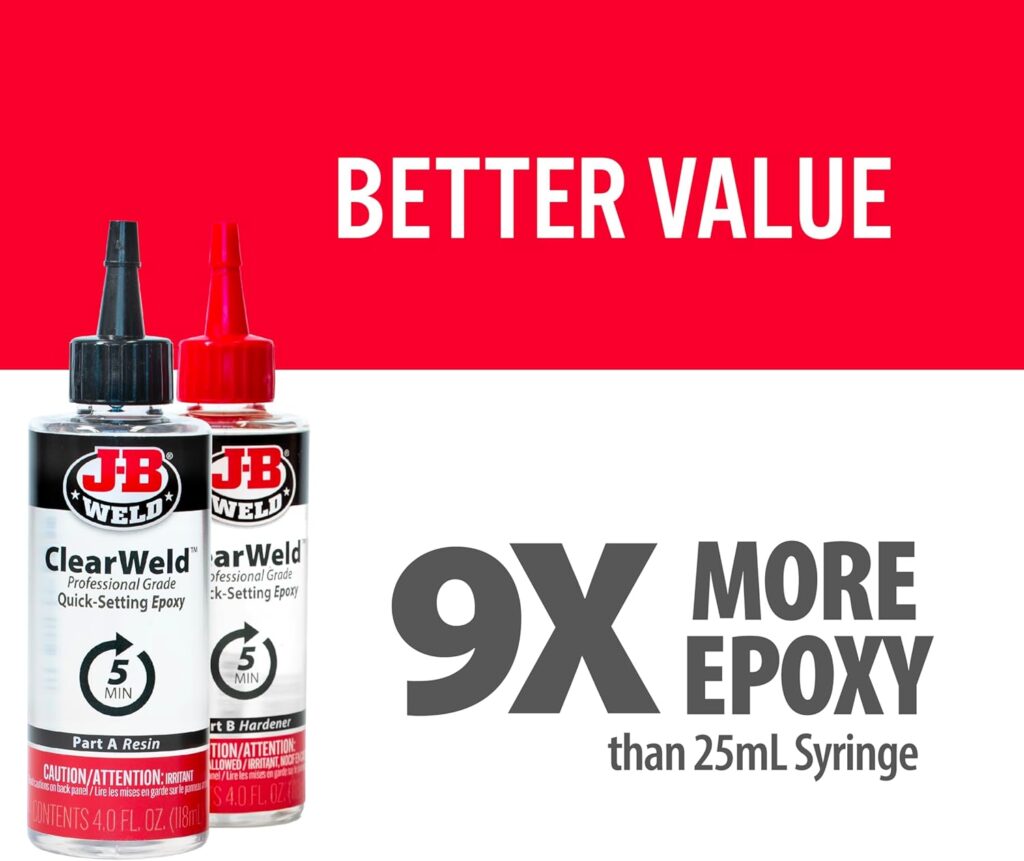
I assess cost based on how often I use the epoxy and how much material each job consumes. The Pro Size—two 4 oz tubes—usually represents better value when I have multiple projects or larger repairs on deck.
Even if it costs a bit more up front than a single small tube, I often find the price-per-ounce and reduced need to repurchase make it a cost-effective option for frequent DIYers and hobbyists.
Is it Worth Buying?
For me, yes—especially if I need a clear, fast-setting epoxy for recurring use. The convenience of more volume and the same trusted formula as regular ClearWeld makes it a smart buy for those who do household repairs, crafts, or quick automotive fixes.
If you only need a one-time tiny repair, a smaller package might be sufficient, but for moderate to frequent use, the Pro Size is a good balance of cost and utility.
Questions I Get Asked Often
People commonly want to know about working time, heat resistance, and whether the epoxy is suitable for food-contact items. I address each with practical answers based on my experience and the product’s general guidance.
These are the FAQs I encounter and how I respond.
Can I sand and paint the cured epoxy?
Yes, once the epoxy is fully cured I sand it to the desired shape and lightly abrade it for paint adhesion. I prime and paint with compatible coatings if I want to color-match a repair or hide edges.
I test small areas if I’m unsure about paint compatibility, and I allow full cure time to ensure the surface is stable before finishing.
Is it heat resistant?
The product performs fine under normal household conditions and in some automotive applications, but it isn’t designed for extremely high-temperature environments or continuous exposure to heat near engine temperatures. For sustained high heat, I select an epoxy specified for elevated temperature resistance.
If heat resistance is critical for your project, check manufacturer specifications or choose a product explicitly rated for the temperatures you expect.
Is it safe for food-contact surfaces?
I avoid using epoxy on surfaces that will be in direct contact with food unless the manufacturer explicitly states a food-safe rating. For food-contact repairs, it’s safer to use materials specifically certified for that purpose.
If an item will only touch food lightly or infrequently, I still prefer to replace the component or use a product with clear food-safe certification.
Final Thoughts
I recommend the J-B Weld Pro Size ClearWeld 5 Minute Set Epoxy as a reliable, clear-curing adhesive that delivers fast set times and strong bonds for a wide range of household and hobby tasks. Its clarity, tensile strength, and convenient two-tube packaging make it one of the more useful epoxies I keep on hand.
I like that it balances speed and appearance, and I use it when I want a neat, transparent repair without long curing waits. With careful surface preparation, proper mixing, and attention to layer thickness, it consistently gives me predictable and durable results.

Disclosure: As an Amazon Associate, I earn from qualifying purchases.