

Are we trying to find an industrial-grade epoxy that holds up under impact, fatigue, and heavy-duty structural use?
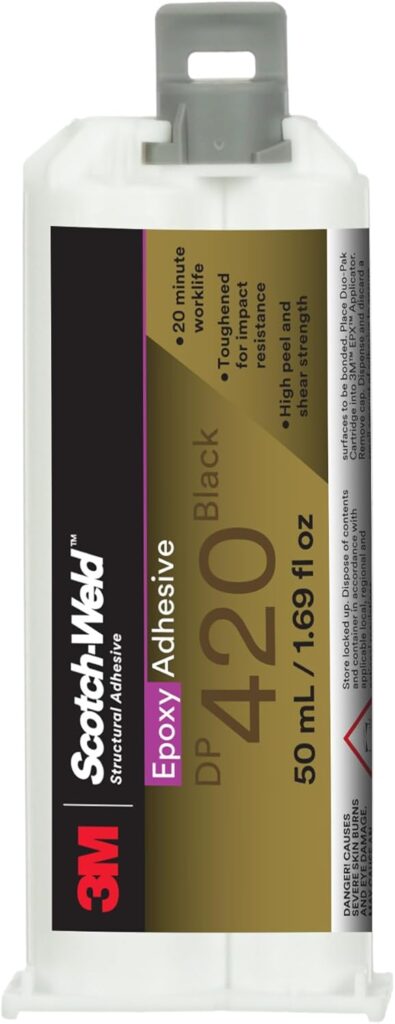

Product overview: 3M Scotch-Weld Epoxy Adhesive DP420, Black, Two-Part Epoxy Structural Adhesive, High Impact and Fatigue Resistant, Maintains Bond Strength, 50 mL (1.69 fl oz) Duo-Pak
We like that the product name tells us exactly what this adhesive is built to do. This two-part epoxy by 3M is formulated for structural bonding where high impact resistance and fatigue life are required, and it ships in a Duo-Pak cartridge for measured dispensing.
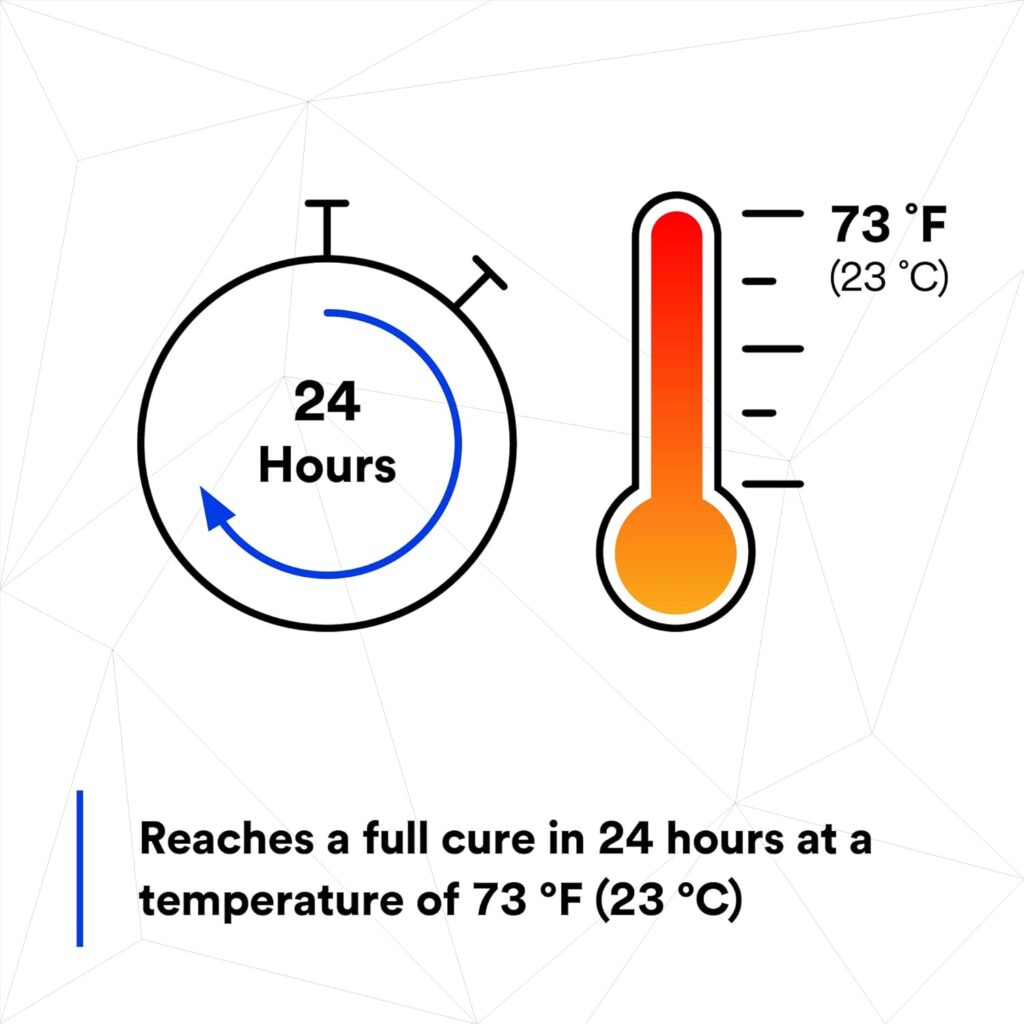
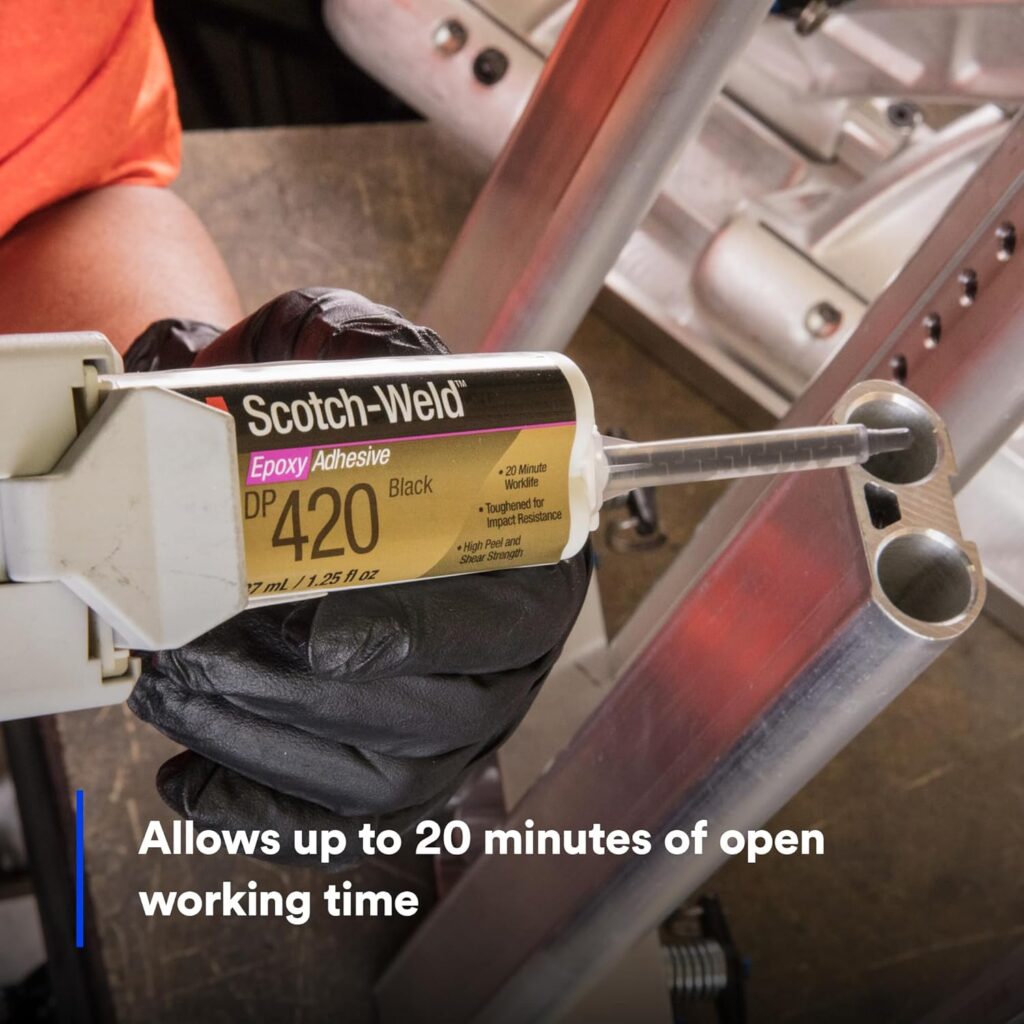
We rely on adhesives that combine strength with practical working time, and DP420 promises up to 20 minutes of open working time and a full cure in 24 hours at 73 °F (23 °C). It’s intended for industrial/occupational use only and is available in black or off-white and either bulk or Duo-Pak packaging.
What’s in the package
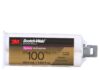
We generally receive a Duo-Pak (DP) cartridge when we order the 50 mL option. The Duo-Pak contains the two epoxy components separated for accurate metering and is intended to be used with a static mixer or dispensing system to ensure proper mixing ratio.
We appreciate packaging that reduces measuring error and speeds setup on the benchtop or in a production environment, and the Duo-Pak accomplishes that by pre-metering the two components.

3M Scotch-Weld Epoxy Adhesive DP420, Black, Two-Part Epoxy Structural Adhesive, High Impact and Fatigue Resistant, Maintains Bond Strength, 50 mL (1.69 fl oz) Duo-Pak
Quick specifications and features table
We find it useful to have a concise specification table for quick reference. Below we summarize the key attributes that matter most when choosing an industrial epoxy.
| Attribute | Specification / Notes |
|---|---|
| Product name | 3M Scotch-Weld Epoxy Adhesive DP420, Black, Two-Part Epoxy Structural Adhesive, High Impact and Fatigue Resistant, 50 mL Duo-Pak |
| Form | Two-part epoxy (resin and hardener) |
| Color | Black (also available off-white) |
| Packaging | 50 mL Duo-Pak (also available in bulk) |
| Mixing / Dispensing | Duo-Pak with static mixer or automated dispensing system |
| Open working time | Up to 20 minutes (at 73 °F / 23 °C) |
| Full cure | 24 hours at 73 °F (23 °C) |
| Bonded substrates | Metals, ceramics, wood, glass, many composites and plastics |
| Strength | High shear strength; designed for long-lasting bonds |
| Durability | High impact and fatigue resistance |
| Certifications | UL 94 HB Certified |
| Use | For industrial/occupational use only (not for consumer sale/use) |
| Automation support | Digital Dispensing Assistant available for time-pressure automated systems |
We use this quick reference when planning jobs so that all critical constraints are visible at a glance.

Why we consider DP420 for structural bonding
We often choose adhesives based on the environment, loading conditions, and substrates involved. DP420 is formulated to retain bond strength under repeated stresses and impacts, which makes it a natural candidate for structural applications where fatigue is a concern.
We appreciate that the product explicitly targets applications such as sporting goods, metalworking, general industrial, and transportation—areas where bonds undergo repeated loading cycles and where failure can be costly or dangerous.
Strength and durability profile
We focus on shear strength and fatigue life when we specify adhesives for structural joints. DP420’s formulation emphasizes high shear strength and resistance to impact and cyclic loading, which helps maintain joint integrity under demanding service conditions.
We still recommend consulting 3M technical datasheets for exact numerical values and designing joints conservatively, but the advertised performance aligns well with industrial structural requirements.
Compatible substrates and limitations
We often have to join dissimilar materials, and DP420 lists a wide substrate range including metals, ceramics, wood, glass, many composites, and plastics. That flexibility is one reason we turn to this epoxy for repair and manufacturing tasks.
We also note that “many plastics” does not mean every plastic bonds equally well; low surface energy plastics (like certain polyolefins) may need special surface treatment or primer. When in doubt, we test a small sample joint or consult 3M’s technical guidance.
Metals and ceramics
We frequently bond metals and ceramics with DP420 because its high shear strength and toughness help create durable joints. For metals, we prepare surfaces by cleaning and abrading to improve adhesion and reduce corrosion risk.
We recommend mechanical preparation (scuffing) and solvent cleaning for metal and ceramic surfaces to obtain the best results.
Composites and plastics
We like using DP420 on fiber-reinforced composites and many engineering plastics. For high-performance plastics, adhesion typically improves with plasma treatment, flame treatment, or chemical primers.
We always verify compatibility and, if necessary, perform adhesion testing on representative samples before committing to production bonding on plastic parts.
Wood and glass
We use DP420 for wood and glass when structural bonding is required. The epoxy’s toughness helps with joints that may be subjected to shock or flexing, but proper surface cleaning and fit-up remain important for consistent results.
We note that wood species with varying porosity can absorb resin differently; clamping and bloom control techniques help us ensure even bond lines.
Typical applications and industries
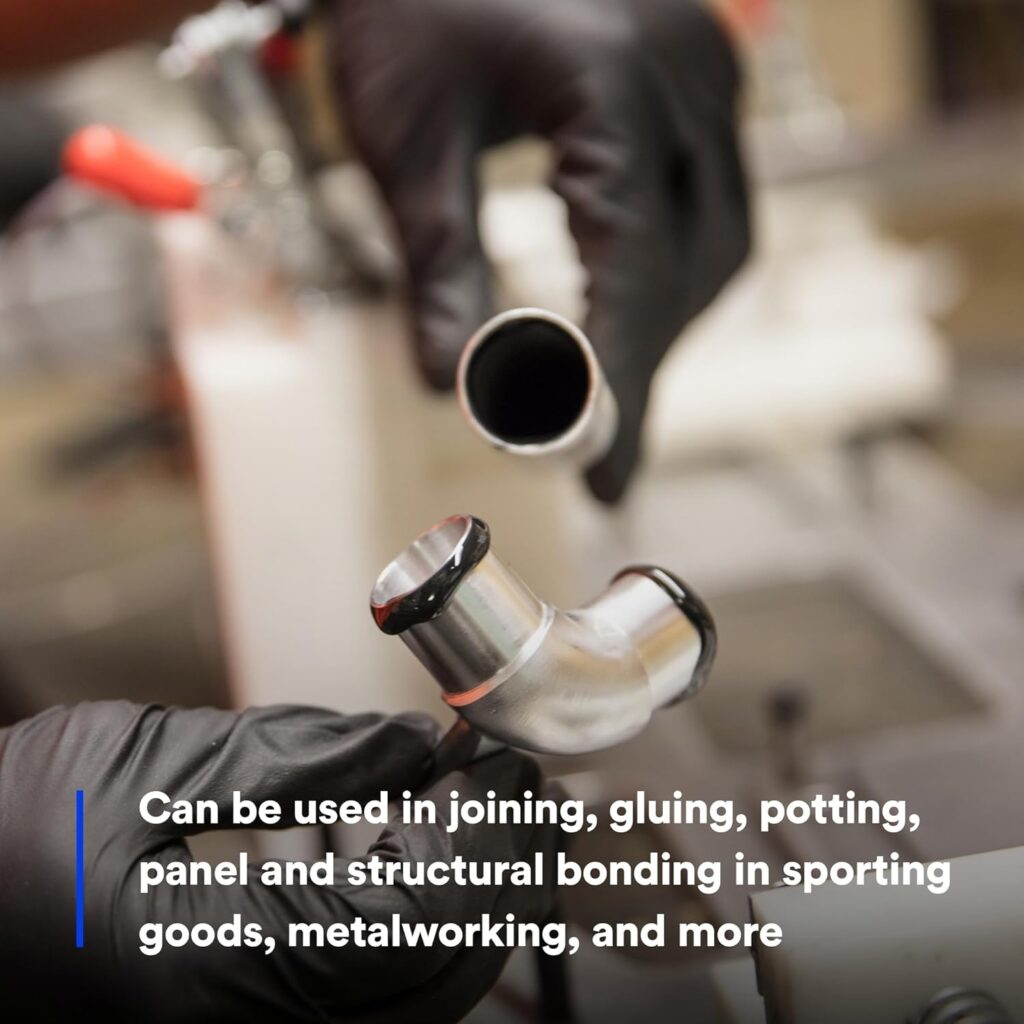
DP420 is marketed for joining, gluing, potting, panel and structural bonding across sporting goods, metalworking, general industrial, and transportation. Our experience confirms these are good fits: where dynamic loads and impact resistance matter, this adhesive performs well.
We recommend it for component assembly, repair of load-bearing parts, potting electronic assemblies where mechanical stability is required, and bonding panels that experience flex or vibration.
Sporting goods and composites
We often see DP420 used to bond composite components in sporting equipment where impact and fatigue conditions are common. Its toughness and ability to retain bond strength under repeated loads make it a sound choice for laminated and bonded composite parts.
We still advise monitoring for weight and bond-line thickness in sport applications to avoid adding unnecessary mass.
Metalworking and industrial manufacturing
In metalworking, we use DP420 for joining dissimilar metals and structural assemblies that benefit from a distributed load path rather than point fastening. The epoxy can reduce stress concentrations that bolts or rivets create.
We recommend designing adhesive joints to distribute loads and considering hybrid fastening (adhesive plus mechanical fastener) in critical assemblies.
Transportation and mobility
We consider DP420 for interior and non-critical exterior transportation components where repeated loading and vibration are expected. For certain exposed exterior use, we check environmental resistance and follow manufacturer guidance for specific service conditions.
We avoid using DP420 in consumer-facing applications without checking regulatory use constraints because the product is intended for industrial/occupational use only.
Working time, cure schedule, and processing windows
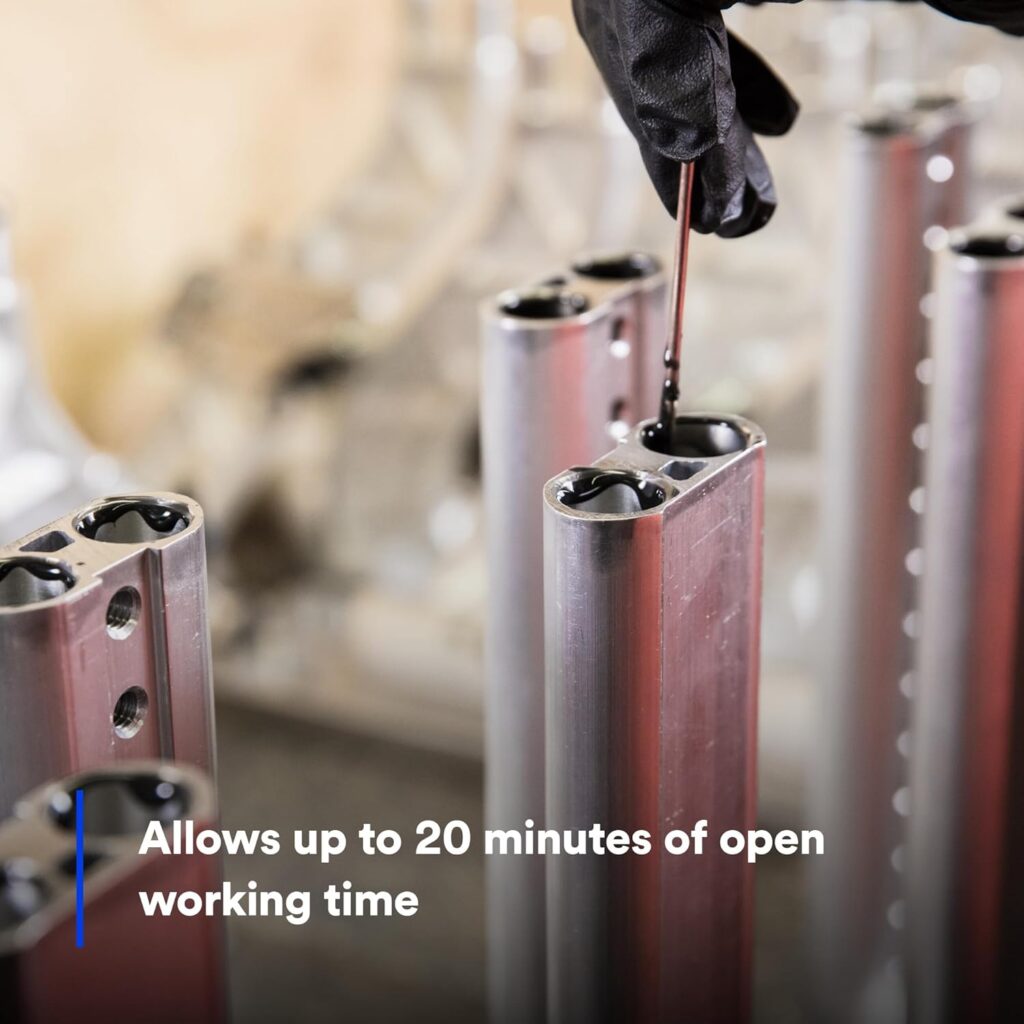
Open working time (also called pot life) and cure profile determine our assembly throughput planning. DP420 offers up to 20 minutes of open working time at 73 °F (23 °C), giving a short but useful window for positioning and minor adjustments.
Full cure is typically achieved in 24 hours at 73 °F (23 °C). If we need earlier handling strength, we may employ gentle heat (if compatible with substrates) to accelerate cure—but we always follow 3M’s technical guidance and safety recommendations.
Factors that affect working time and cure
Temperature, humidity, bond-line thickness, and mixing quality affect both working time and cure rate. We see shorter working time at elevated temperatures and extended cure times in colder environments, so we plan accordingly.
We measure cure progress by handling tests and, for production, incorporate test coupons to confirm strength development when environmental conditions vary.
Clamping and fixturing recommendations
During the open working time, we adjust and reposition components and then clamp to maintain joint alignment while the adhesive develops strength. We typically allow for at least the manufacturer-recommended time before removing clamps for load-bearing service.
We use fixturing that provides consistent pressure without squeezing out excessive adhesive; a controlled bond-line thickness improves performance consistency.
Dispensing options and automation support
The Duo-Pak packaging is convenient for manual dispensing with a static mixer, and it integrates well with semi-automated and automated time-pressure dispensing systems. We appreciate that 3M offers a Digital Dispensing Assistant to help reduce setup time on automated systems.
We find that consistent mixing and application are critical to achieving the advertised mechanical properties, and controlled dispensing systems make that repeatability easier to achieve in production.
Manual vs automated dispensing
For small runs and repairs, we use the Duo-Pak with static mixer nozzles to ensure proper mixing. For larger-scale production, we deploy time-pressure automated dispensers with pre-programmed parameters so that each shot has consistent flow and mix.
We recommend validating dispensing parameters and conducting trial runs when transitioning from manual to automated processes.
Digital Dispensing Assistant
We like that the Digital Dispensing Assistant helps set up time-pressure systems more quickly and accurately. This tool helps minimize trial-and-error, which saves time and reduces material waste in production environments.
We still validate the final settings and perform process capability studies to lock in production parameters.
Surface preparation: our recommended steps
Good adhesion starts with proper surface prep. We typically follow a four-step process: clean, abrade (if applicable), re-clean, and dry. This helps remove oils, oxidation, and contaminants and provides a surface the epoxy can bond to.
We avoid shortcuts here because poor surface prep is the most common cause of adhesive failure. Taking the time to prepare surfaces pays off in bond reliability.
Cleaning agents and solvents
We prefer to clean with a compatible solvent like isopropyl alcohol or acetone, depending on the substrate. For heavy contamination, we may use a mild alkaline cleaner followed by solvent wipe. After solvents, we allow the surface to flash off completely before applying adhesive.
We use lint-free wipes and fresh solvent to prevent redeposition of contaminants.
Mechanical abrasion and priming
For metals and composites, we abrade using suitable grit to create a consistent surface profile. For certain plastics, chemical or plasma treatments and primers can dramatically improve adhesion.
We consult 3M’s technical data for recommended primers when bonding challenging substrates, especially low energy plastics.
Environmental and service considerations
We always consider the service environment (temperature, humidity, chemicals) when specifying an adhesive. DP420’s toughness and fatigue resistance make it suitable for many indoor industrial and transportation environments.
We also recognize that extreme temperatures, UV exposure, or aggressive chemical exposure may require different adhesives or protective measures, and we recommend consulting the product’s technical literature for environmental limits.
Temperature and humidity effects
Cure rate slows at lower temperatures and accelerates with heat. High humidity can affect some adhesives; while DP420 is a structural epoxy rather than a moisture-cure product, we still control humidity during application when possible to avoid condensation on surfaces.
We plan for environmental controls in production and verify bond performance across expected service temperatures.
Chemical exposure and outdoor use
We evaluate expected chemical exposures (fuels, solvents, cleaning agents) and UV exposure when deciding if DP420 is appropriate. For outdoor or chemically aggressive environments, we check the compatibility matrix and consider additional protective coatings if needed.
We avoid assuming suitability for outdoor use without confirmation from 3M’s specifications and testing.
Safety, handling, and regulatory notes
DP420 is labeled for industrial/occupational use only and not for consumer sale or use. We strictly follow the Safety Data Sheet (SDS) and organizational safety protocols when handling this product.
We always wear appropriate personal protective equipment (PPE), ensure adequate ventilation, and train staff on proper handling and emergency procedures.
Personal protective equipment
We use nitrile gloves, safety glasses, and lab coats or coveralls when dispensing epoxies. If sanding cured adhesive, we use respiratory protection appropriate for particulates and follow dust control measures.
We also keep spill kits and first aid supplies nearby and ensure easy access to SDS documentation.
Waste disposal and cleanup
We dispose of uncured adhesive and contaminated materials in accordance with local regulations and organizational hazardous waste procedures. We clean tools and equipment using recommended solvents and dispose of solvent wastes responsibly.
We avoid pouring excess adhesive down drains or into the environment.
Testing, validation, and quality control
We implement joint design validation and testing when using DP420 in critical applications. This includes lap shear tests, peel tests, fatigue testing, or environmental aging depending on service demands.
We set up process controls for mixing, bond-line thickness, cure conditions, and inspection to ensure repeatable performance on production runs.
Sample testing and qualification
Before full-scale use, we bond representative coupons and subject them to mechanical testing and environmental conditioning to confirm the adhesive meets requirements. This step helps us catch substrate-specific issues early.
We document test methods and results in our quality records to support production approvals.
Comparative positioning: how DP420 stacks up
When we evaluate adhesives, we compare key attributes like toughness, working time, cure speed, and substrate range. DP420 sits in a class of structural epoxies that emphasize impact resistance and fatigue life while offering a moderate working time.
We find it particularly competitive where a combination of toughness and reasonable pot life is needed; however, high-temperature epoxies or ultra-fast cures may be preferable for other specialized requirements.
Strengths relative to other epoxies
The main strengths are high impact and fatigue resistance, good shear strength, and a practical open working time for precise assemblies. The Duo-Pak format and support for automated dispensing also make it production-friendly.
We select DP420 when joint toughness and longevity under dynamic loading are priorities.
Situations where other adhesives may be better
If we need an extremely fast cure for high-throughput operations, a rapid-setting epoxy might be a better fit. For high-temperature continuous service, specialized high-temperature adhesives would outperform DP420.
We always choose adhesives tailored to the primary performance requirement—DP420 is excellent for toughness and fatigue but not necessarily the best fit for every single application.
Pros and cons from our experience
We document pros and cons to help others decide quickly. Our practical impressions come from both bench work and production consideration.
Pros
- High impact and fatigue resistance improves longevity of bonded joints.
- Good shear strength for structural applications.
- Practical open working time (up to 20 minutes) allows for positioning and adjustment.
- Full cure in 24 hours at 73 °F (23 °C) supports efficient throughput.
- Duo-Pak format reduces mixing errors and integrates with dispensing systems.
- Available in black or off-white to match visual requirements.
- UL 94 HB certification provides flammability information for design considerations.
We value these benefits especially when building assemblies that must withstand rugged use.
Cons
- Intended for industrial/occupational use only; not available for consumer sale or home hobbyists.
- Working time of up to 20 minutes may be short for very complex or multi-bond assemblies that require long positioning times.
- Some low surface energy plastics may require primers or special surface treatments for reliable adhesion.
- Full performance depends on correct mixing and surface preparation; poor technique can undermine results.
We accept these trade-offs because the product delivers the intended structural toughness when used correctly.
Practical tips and best practices
We like to share tips that reduce failure risk and improve consistency. Attention to detail during prep, mixing, dispensing, and curing yields the best results.
- Mix thoroughly and use a static mixer or properly calibrated equipment to avoid unmixed pockets. Incomplete mixing reduces strength dramatically.
- Maintain consistent bond-line thickness with appropriate spacers or controlled fixturing to avoid stress concentration.
- Scuff and clean surfaces immediately before bonding to prevent recontamination.
- Use clamps or fixtures to ensure intimate contact throughout cure.
- Store cartridges per 3M recommendations and rotate stock to avoid expired materials.
We’ve found these simple practices have big payoffs in joint reliability.
Handling small repairs vs production bonding
For small repairs, the Duo-Pak with a hand applicator and static mixer works well and minimizes waste. For production, we integrate into dispensing systems and use the Digital Dispensing Assistant to accelerate setup and ensure repeatability.
We also keep a set of validated parameters and process checks for production runs to maintain quality across batches.
Storage and shelf life
We store DP420 per 3M recommendations, typically in a cool, dry place and within the product’s shelf life. Proper storage preserves workability and performance characteristics over time.
We label stock with receipt and expiration dates and perform visual checks before use to ensure no separation or discoloration that would indicate degradation.
Temperature and shelf management
We avoid storing cartridges in extreme temperatures or near direct heat sources. If the product has been exposed to cold, we return it to room temperature and mix well before use to ensure proper viscosity and mixing behavior.
We treat shelf-life expiry seriously and do not use cartridge material past recommended dates.
Certifications and compliance
DP420 has UL 94 HB certification, which provides a basic flammability rating for plastics and assemblies. We use certifications like UL listings as one input when determining suitability for regulated applications.
We also confirm that use aligns with regulatory constraints, particularly noting that this product is for industrial/occupational use only, not consumer sale or use.
Documentation and traceability
We retain technical datasheets and SDS documentation for each batch and make them available on the production floor. Traceability helps with quality control and regulatory compliance when the adhesive is used in manufacturing.
We recommend keeping adhesive lot numbers recorded for critical assemblies in case retrospective investigation is needed.
Frequently asked questions (FAQs)
We gather common questions we receive and provide concise answers to help others evaluate DP420 quickly.
Q: Can DP420 be used outdoors? A: It can be used in many industrial applications, but outdoor use depends on UV exposure, temperature cycles, and chemicals in the environment. We check 3M’s technical data and perform environmental testing for outdoor or exterior applications.
Q: Is the Duo-Pak reusable after partial dispensing? A: Reusability depends on how the cartridge and static mixer are handled. For production consistency, we generally use dedicated nozzles and replace mixers between uses. Consult 3M’s handling guidance for specifics.
Q: What surface prep gives the best results? A: Clean with an appropriate solvent, abrade the surface if possible, and remove debris and solvent residues before bonding. For plastics, consider primers or surface activation if adhesion is marginal.
Q: Can we accelerate cure with heat? A: Gentle heat can accelerate cure, but we follow 3M’s recommendations and ensure substrate compatibility. Avoid overheating or introducing thermal stresses.
Q: Is DP420 safe for electronic potting? A: DP420 can be used for potting where mechanical support is the priority, but for electronics we review thermal and electrical properties and verify compatibility with components.
We compile these FAQs into process documentation so that shop personnel can make informed choices.
Real-world example scenarios
We often apply DP420 in a few repeatable scenarios where its properties shine. Below are representative examples that illustrate practical use.
Example 1: Bonding composite panel stiffeners in a sporting goods assembly We use DP420 to bond carbon-fiber stiffeners to a composite panel where impact and repeated flexing are expected. The epoxy’s toughness distributes loads and reduces crack initiation from impact sites.
Example 2: Repairing a metal bracket in a transportation subassembly A cracked metal bracket that previously failed at a bolt hole can be repaired with DP420 to create a bonded patch that extends fatigue life. We ensure proper surface prep and clamp while curing.
Example 3: Potting a sensor housing requiring structural support Where a sensor in a rugged environment needs potting for both mechanical support and vibration resistance, DP420 offers mechanical stiffness and durability while securely anchoring components.
We always document the repair or assembly process and perform post-bond inspections to verify joint integrity.
Final thoughts and recommendation
We find 3M Scotch-Weld Epoxy Adhesive DP420 to be a robust choice for structural bonding tasks that require high impact and fatigue resistance along with reliable shear strength. Its Duo-Pak packaging, reasonable open working time, and full cure in 24 hours at room temperature make it practical for both workshop repairs and production settings.
We recommend DP420 when the primary needs are toughness, durability under cyclic loading, and the ability to bond a wide variety of substrates. For critical or unusual environments, we advise performing sample testing and consulting 3M’s technical data sheet to confirm specific mechanical and environmental performance.
We also emphasize safe handling (industrial use only), proper surface prep, consistent mixing and dispensing, and thorough validation. When we follow those practices, DP420 delivers consistent, long-lasting bonds that meet demanding industrial requirements.

Disclosure: As an Amazon Associate, I earn from qualifying purchases.