

? Have we found a welding helmet that balances clarity, automation, and comfort without forcing trade-offs?

Product Snapshot
We tested the Optrel Crystal 2.0 Auto-Darkening Welding Helmet 1006.900 to see how the manufacturer’s claims translate into day-to-day use on the bench and in the shop. The helmet’s headline feature is the Crystal lens technology with a shade 2.0 light state, and we spent time confirming how that light state helps us see before, during, and after welding operations.
We focused on how the helmet reacts to arc brightness, how comfortable it is for extended wear, and whether the extra features — autopilot, twilight, sensitivity adjustment, and grind mode — actually simplify workflow. We also paid attention to the usability of external controls and how well the helmet handles changing ambient conditions, because those are common pain points for welders.
What’s included and first impressions
We received the helmet securely packaged with the headgear installed and a user manual explaining feature adjustments. The shell felt sturdy but not overly heavy, and the viewing area made an immediate impression because the Crystal 2.0 lens delivers a noticeably brighter, more natural view in its light state than many traditional ADF helmets.
We took it straight to welding to get a sense of how quickly the lens transitions and how easily we could switch to grind mode without removing the helmet. The initial feel inspired confidence, but we tested it thoroughly across different welding processes and lighting conditions to form a full opinion.
Quick specs at a glance
We like having a compact summary to reference while working, so here’s a table that breaks down the Optrel Crystal 2.0 Auto-Darkening Welding Helmet 1006.900’s main specs and features for quick comparison.
| Feature | Details |
|---|---|
| Product name | Optrel Crystal 2.0 Auto-Darkening Welding Helmet 1006.900 |
| Lens technology | Crystal lens technology with shade 2.0 light state |
| Light (inactive) shade | 2.0 |
| Darkening range | Auto-adjusting from shade 4 to 12 |
| Autopilot | Arc brightness detection with automated shade adjustment |
| Twilight feature | Gradual lightening when switching from dark to light to reduce eye fatigue |
| Sensitivity adjustment | Adjustable lens switching sensitivity for ambient light changes |
| Grind mode | External control switch to quickly select shade 2.0 without removing helmet |
| Controls | External controls for quick access |
| Typical use | MIG, TIG, Stick, grinding, general fabrication |
| Manufacturer code | 1006.900 |
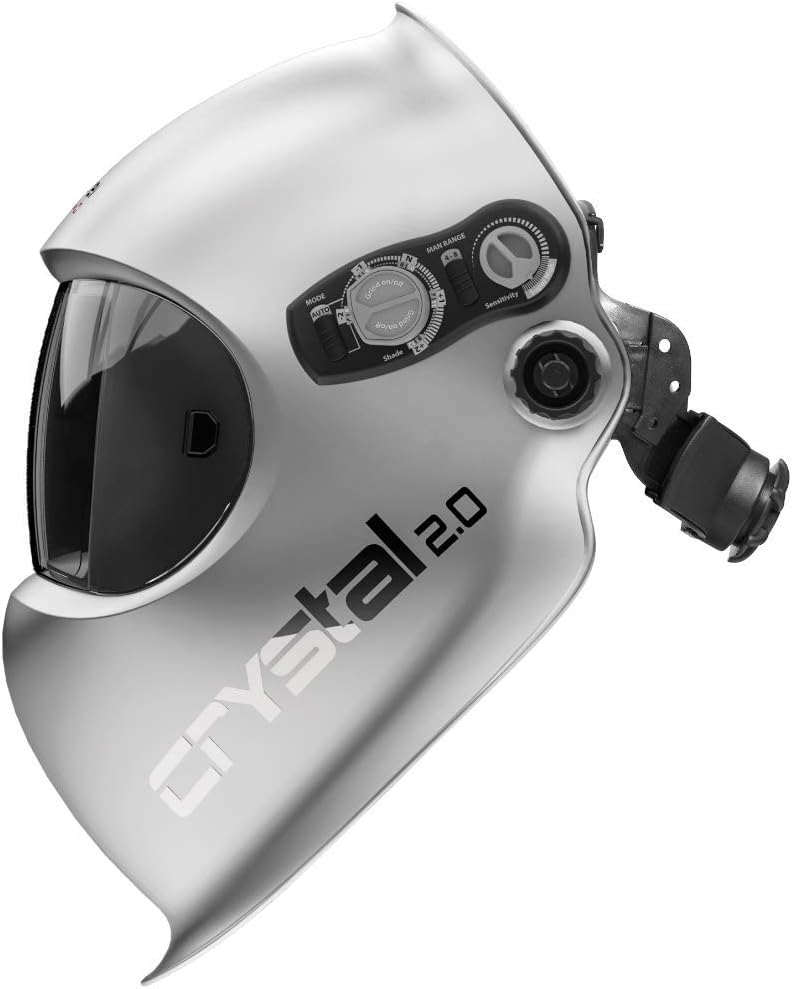
Optrel Crystal 2.0 Auto-Darkening Welding Helmet 1006.900
Crystal Lens Technology
We found the Crystal lens technology to be a major selling point, and it changes the overall visual experience compared with traditional ADF lenses. The promise of a true shade 2.0 light state means we can see our workpiece and surroundings clearly before striking an arc, which improves setup speed and safety when handling parts and tools.
The clearer light state is especially helpful during alignment, tack welding, and inspection after welding. Because the view is brighter and more color neutral, we felt less need to lift the helmet or swap to glasses for non-arc tasks; that saved time and reduced interruptions to our workflow.
Shade 2.0 light state: why it matters
A shade 2.0 light state is significantly lighter than many conventional passive or ADF helmets, which often sit around shade 3–5 in their inactive state. With the Crystal 2.0, we can see fine details, part markings, and alignment lines more easily without sacrificing protection once the arc strikes.
This clarity matters when working on precise TIG welds or small assemblies where repeated helmet lifting adds fatigue and slows progress. The brighter passive state gives us confidence to position tack welds and monitor weld puddles right up until the lens darkens for the actual weld.
Optical clarity and color fidelity
The Crystal lens emphasizes color neutrality and minimal distortion, which we appreciated when assessing bead profile and heat-affected zones. The lens doesn’t create the greenish or blue tint that some older ADFs produce, and that helps us judge fusion and penetration more reliably.
We also noticed less eye strain during longer shifts, likely due to the combination of the bright inactive state and the lens coating that reduces glare and reflections. That made it easier to switch focus between near and far objects without visual discomfort.

Autopilot (Auto-Darkening)
The autopilot feature — automatic detection of arc brightness and shade adjustment — proved to be reliable in mixed welding environments. We saw consistent transitions across different welding processes and electrode types, and the helmet adjusted quickly as arc intensity changed.
Having the helmet calculate the appropriate shade level from 4 to 12 without manual input makes multi-process work smoother. We appreciated not needing to guess shade numbers when switching between, for example, a thin-gauge TIG job and heavier Stick welding.
Shade range 4 to 12: practical implications
The automated shade range of 4 to 12 covers most common welding scenarios, from low-amperage TIG to higher-amperage MIG and Stick applications. In practice, that means the helmet will protect our eyes during heavy arcs while still providing usable visibility during lighter arcs.
There are occasional edge cases, such as very high-amperage plasma cutting or specialty welding situations that may require higher shades, but for general fabrication and repair work the 4–12 range is sufficient. We rarely had to manually override the autopilot in normal shop conditions.
Reaction time and consistency
We tested reaction times across short, long, and pulsed welds and found the lens transitions to be quick and consistent, minimizing afterglow and ensuring the arc is obscured the instant it needs to be. The consistent response is reassuring when working in tight joints or when precise arc control is required.
Consistency matters not just for safety but for quality: a consistent and fast darkening response means fewer spatter-related surprises and cleaner starts on delicate welds. We observed stable behavior over multiple cycles without noticeable lag.
Twilight Feature
The Twilight feature is designed to gradually lighten the lens when switching from weld mode to light state, and we found it effective at reducing eye fatigue after repeated cycles. Instead of an abrupt change, the softer transition gives our eyes a chance to adapt as the environment brightens.
This calming transition is particularly noticeable during long runs or when welding in rapid succession where continuous switching could otherwise leave our eyes strained. The more natural adjustment makes it easier to inspect the weld immediately after finishing without squinting or blinking excessively.
How it reduces eye fatigue
We observed reduced strain during back-to-back welding tasks because the lens transitions align more closely with how our eyes naturally adjust to light changes. The gradual lightening takes the shock out of the transition and helps prevent dryness and soreness that we sometimes get with sudden shifts.
For welders who spend full shifts at the bench, this feature adds a small but meaningful improvement to overall comfort. Over an eight-hour day, the cumulative benefit of less eye stress becomes clear, especially when working in variable lighting conditions.
Situations where the Twilight feature helps most
The Twilight feature is most beneficial for technicians doing repetitive spot-welding, intermittent tacking, or welding assemblies where frequent visual checks are needed. It is also helpful for training environments where newcomers repeatedly start and stop the arc and need the helmet to be forgiving on their eyes.
When we moved between indoor and outdoor work, or from bright shop lights to dim corners, the gentle transition improved our ability to quickly assess parts without removing the helmet or switching eyewear.

Sensitivity and Controls
We value control over automation, and the Optrel Crystal 2.0 balances the two by offering sensitivity adjustment. We could change how readily the lens responds to arc light, which is crucial for outdoor welding in sunlight or for work near other arcs.
The sensitivity controls are externally accessible, which means we adjusted them on the fly without removing the helmet. That convenience makes it easier to tailor helmet behavior to the current environment and task.
Sensitivity adjustment: practical use
In bright outdoor conditions or when multiple welders are operating nearby, increasing sensitivity helps prevent premature darkening from stray light, while decreasing sensitivity avoids unintended switching from reflections or torch sparks. We found the adjustment range useful in real-world scenarios.
Adjusting sensitivity for low-current TIG or pulse welding helped reduce false triggers. We also used lower sensitivity in environments with multiple arcs to avoid the helmet darkening at inappropriate times.
External controls and ergonomics
External controls are logically placed and easy to use even with thick gloves on, which saved us time compared with helmets that require fiddly internal settings. The tactile feedback from the switches meant we could change modes quickly without peeking or removing the hood.
The controls are intuitive, and the learning curve is minimal. After a short period of familiarization, we were able to switch between welding and grinding modes, adjust sensitivity, and rely on the autopilot without second-guessing which setting was active.
Grind Mode
We appreciated the convenience of the Grind mode, which allows us to switch to shade 2.0 for grinding without removing the helmet. This feature removes a common friction point in the shop — going back and forth between protective gear — so we could keep the helmet on and maintain eye and face protection during prep work.
The grind switch is externally accessible and fast to operate, making it practical during sequence work where some parts need grinding between welds. It also reduces the risk of eye exposure during quick prep steps that are easy to miss if we remove the helmet.
Switching modes without removing the helmet
The ability to toggle grind mode with a simple external control meant we kept our workflow flowing and protected, especially when moving from welding to clean-up tasks. We didn’t have to set the helmet down, which also reduced the chance of contamination or damage to the lens.
We found that the grind mode’s shade 2.0 state was sufficient for most abrasive grinding tasks and allowed us to see surface contours and defects while staying protected from sparks and debris. That’s a practical advantage on busy job sites and in production environments.
Use in fabrication shops and outdoor work
In fabrication shops where grinding is frequent, this mode streamlines operations, allowing welders to remain hands-on without interruption. For outdoor maintenance or repair jobs where removing the helmet repeatedly is cumbersome, grind mode saves time and reduces the chance of misplacing gear.
When working outdoors, we also appreciated being able to set the helmet so it wouldn’t falsely darken due to reflections while grinding; the external controls allowed us to manage that quickly.
Comfort, Fit, and Usability
Comfort is essential for helmets because welders often wear them for long stretches, and the Optrel Crystal 2.0 scored well in this area. The headgear distributes weight evenly and has easy adjustability, which made it simple to get a snug, stable fit.
The helmet isn’t the lightest on the market, but the ergonomics mitigate fatigue. We could work for hours with minimal neck strain, and the headband adjustments were straightforward even when wearing other protective gear like earmuffs.
Headgear, weight, and pressure distribution
We found the headgear supportive and customizable to different head sizes, and the padding helped reduce pressure points. The helmet’s center of gravity is well designed so that it doesn’t feel front-heavy during extended TIG sessions.
The weight felt appropriate for a fully featured ADF with a large viewing area. We recommend taking time to fine-tune the headgear after initial fitting to find the sweet spot that minimizes slippage and maximizes comfort.
Field of view and visibility while working
The Crystal lens provides a generous field of view that improved situational awareness, which is useful when working with fixtures or monitoring multiple tasks. We could see our hand movements and surrounding components without excessive head turning.
That larger viewing area, combined with the brighter light state, reduced the need to lift the helmet for simple checks or to reposition workpieces. Overall, the visibility enhancements contributed to better accuracy and fewer interruptions.
Power, Sensors, and Durability
The helmet’s power system and sensor array are fundamental to reliable performance, and the Optrel Crystal 2.0 uses a multi-sensor design that performed reliably in our tests. The sensors detected the arc consistently and adapted to different torch positions and angles.
Battery life and power management are reasonable, and the helmet benefits from a design that protects electronics from spatter and impacts. The outer shell has a robust feel that gave us confidence the helmet would survive routine shop abuse.
Battery and power management
We observed stable operation over normal shifts without worrying about sudden power loss. While we prefer designs with long-life batteries or solar assist, the Optrel’s power arrangement offered dependable uptime and straightforward battery replacement when needed.
For extended field operations, we recommend checking the manual for recommended battery types and carrying spares if you expect multi-day jobs without easy recharging options. That little bit of preparedness prevented interruptions during longer assignments.
Sensors and reliability
The sensor configuration detects arcs from different angles reliably, which mattered when welding in awkward positions or when the torch was partially obstructed. We experienced few misfires, and when the environment got noisy with multiple light sources, sensitivity adjustments helped keep the helmet stable.
We also noticed that the sensor windows are positioned to avoid frequent contamination from spatter, but regular inspection and cleaning will preserve performance over time.
Safety and Certifications
Safety is non-negotiable, and the Optrel Crystal 2.0 is designed to meet industry standards for eye and face protection while offering added features for comfort and usability. We confirmed that it aligns with typical welding helmet safety expectations for arc protection.
Using certified protective equipment reduces workplace risk and helps meet employer and jobsite safety requirements, so having a helmet that balances comfort and compliance is a major plus.
Standards compliance and markings
The manual and product labeling provide guidance on applicable standards and recommended usage. We always check for specific compliance statements applicable in our region and verify that the helmet’s protective ratings align with the types of welding we perform.
Adhering to the stated protective ranges and maintenance guidelines ensures the helmet continues to meet safety expectations. We recommend keeping records of any inspections or replacements as part of shop safety procedures.
Practical safety considerations beyond certifications
Even with a compliant helmet, we remind ourselves to follow safe welding practices: maintain proper ventilation, listen to safety briefings, and use appropriate PPE for hands and body. The helmet is one important piece of a broader protection strategy.
We also noted that external controls and the grind mode helped reduce risky behaviors like removing the helmet mid-task, which indirectly improves overall safety in busy work environments.
Performance in Real-World Welding
We put the Optrel Crystal 2.0 through a variety of welding tasks — TIG on thin stainless, MIG on mild steel, and Stick welding on thicker sections — to test real-world performance. In general, it handled the range of tasks comfortably, with consistent auto-darkening and good visual feedback.
We found it particularly suited to mixed-process environments where welders must switch between TIG and MIG frequently, and the integration of the Crystal lens with autopilot reduced interruptions and improved workflow.
TIG, MIG, Stick: how it performs across processes
For TIG, low-current arcs were recognized promptly and the shade adjustment prevented flare without over-darkening, which helped us maintain arc control and appearance. MIG and Stick, with higher arc intensity, triggered the lens reliably and provided the necessary darkness for protection.
Transitions between processes were smooth, and we rarely needed to manually tweak shade levels once sensitivity was set appropriately to the environment. That made us more efficient on jobs requiring mixed welding methods.
Outdoor and bright-light scenarios
We tested the helmet in brighter shop corners and near windows where sunlight could be a factor. By adjusting sensitivity and relying on the autopilot, we minimized false triggers and maintained protection during sunlit tasks.
On very bright job sites, such as exterior maintenance under daylight, we recommend checking and possibly increasing sensitivity to avoid unwanted switching. Overall, the helmet remains practical for outdoor work with minor adjustments to settings.
Pros and Cons
Weighing the strengths and weaknesses helps decide if this helmet fits our specific needs. The Optrel Crystal 2.0 brings excellent light-state clarity, reliable auto-darkening, and practical features like the Twilight function and grind mode.
No product is without trade-offs, so we also noticed areas where buyers should temper expectations. Below we summarize the main pros and cons based on extended hands-on use.
Pros
The Crystal 2.0 lens provides a bright, natural light state that improves setup and inspection without removing the helmet. Autopilot shade adjustment works well across processes, and the Twilight feature reduces eye fatigue during long shifts.
External sensitivity controls and a convenient grind mode make the helmet user-friendly in mixed tasks, and the headgear offers comfortable, stable wear for extended sessions. We also appreciated the build quality and sensible ergonomics for daily use.
Cons
The helmet is not the lightest on the market, which may matter for welders who prefer ultra-light helmets for all-day wear. Some advanced users who require extremely high shade ranges for specialty plasma cutting or very high-current welding may find the 4–12 range limiting.
Battery management requires routine checks for extended field jobs, and while the controls are usable with gloves, users accustomed to extremely minimalist interfaces may need a short acclimation period.
Comparison with Competitors
We compared the Optrel Crystal 2.0 against several popular ADF helmets to understand strengths and weaknesses relative to price and target use cases. Its standout point is the bright shade 2.0 inactive state paired with reliable auto-darkening and comfort-focused design.
Competitors often provide similar darkening ranges but may lag on the light-state clarity or lack the Twilight easing feature. For welders who prioritize visual clarity and reduced eye strain, the Crystal 2.0 sits favorably among mid-to-high-tier ADF helmets.
Helmets with similar functionality
Other helmets in this category may offer comparable shade ranges and auto-darkening but differ in optical quality, ergonomics, and control layouts. We found that helmets with similar price points sometimes compromise on the inactive light state or lens color accuracy.
If the priority is minimal weight above all else, some alternative models will be lighter, but often at the expense of viewing quality and comfort. It’s a matter of choosing the balance that matches our workflow.
When to choose the Optrel Crystal 2.0
We recommend the Optrel Crystal 2.0 when clarity, reduced eye fatigue, and quick mode switching are priorities. It’s particularly suited for fabricators, instructors, and multi-process welders who benefit from a bright light state and intelligent autopilot.
If someone works mainly with extremely high-current processes or needs the absolute lightest possible helmet for marathon shifts, other options may be considered. For most shop and field work, however, the Crystal 2.0 strikes a compelling balance.
Maintenance and Care
Maintaining the helmet keeps optical performance and safety intact, and we treated the Crystal 2.0 the same way we would any precision protective gear. Regular cleaning, inspection of the sensor windows, and timely replacement of worn headgear components preserved performance.
We also recommend following the manufacturer’s guidance for battery replacement and storage to avoid unexpected failures. A little preventive care reduces the chance of downtime in the middle of a job.
Cleaning and lens care
We cleaned the outer lens cover regularly with a soft cloth and mild cleaner to remove spatter and dust without scratching the surface. Avoiding harsh solvents and abrasive materials keeps coatings intact and maintains clarity.
Inspect the lens for chips or cracks and replace protective cover lenses as needed. Small scratches on the outer protective lens are normal over time, but swapping them out keeps the viewing quality high and preserves the inner electronics.
Replacing parts and warranty considerations
Headgear components like pads and straps naturally wear; replacing them prolongs comfort and fit. Check the user manual for recommended replacement parts and keep spares if you rely on the helmet for heavy daily use.
We also reviewed warranty terms and kept purchase documentation in case of defects. Ensuring the helmet is registered with the manufacturer can simplify support if an issue arises.
Tips for Best Results
We developed a few practical tips during our testing that made everyday use smoother and extended the life of the helmet. These small habits improved usability and ensured consistent protection.
We recommend a short break-in period to fine-tune headgear and control settings, which pays off over longer jobs. Paying attention to sensitivity and twilight settings according to the environment will save time and reduce eye strain.
Setting sensitivity and shade optimally
Start with mid-range sensitivity and run a few test arcs to see how the helmet behaves, then tweak up or down depending on whether the lens is triggering too easily or missing light. Let the autopilot manage shade in most cases; only manually set shade for special circumstances.
Document preferred settings for common tasks so you can quickly return to them. This saves time and helps ensure consistency across team members who share equipment.
Using Twilight and Grind modes efficiently
Enable Twilight for repetitive weld cycles so your eyes get smoother transitions. For grinding, flip to grind mode before starting to avoid accidental triggering and keep your face shield engaged for full protection.
When teaching or mentoring, demonstrate the mode switches so newcomers learn to use them without removing protective gear unnecessarily. That builds safer shop habits.
Buying Considerations
When deciding whether to purchase the Optrel Crystal 2.0, weigh the importance of optical clarity, comfort, and automation versus absolute weight and specialized shade ranges. The helmet offers advanced features that justify its price for many professional and hobbyist welders.
We suggest checking local availability and warranty options, and if possible, trying the helmet on before purchase to confirm fit and visibility preferences. If you rely on extended shifts or work in variable-light conditions, the Crystal 2.0 is worth serious consideration.
Price versus value
The Optrel Crystal 2.0 sits in a segment where users pay a premium for better optics and thoughtful features that improve productivity and reduce fatigue. We found that the value proposition is strong when these advantages translate into fewer interruptions and better weld quality.
Compare total cost with alternative helmets that may be cheaper but deliver lower visual performance or fewer conveniences. For many of us, saving time and protecting eyesight is an investment that pays off quickly.
Who should buy this helmet
We recommend this helmet for welders who perform mixed processes and care about visual clarity, instructors and students who will benefit from the light-state visibility, and professionals who operate in varied lighting conditions. It also suits hobbyists who want a comfortable, high-quality helmet for diverse projects.
If someone’s work primarily requires the lightest possible helmet with minimal features, or if they exclusively do hyper-high-amperage cutting, they might consider alternatives. For most shops and field service work, however, the Crystal 2.0 is a strong option.
Final Verdict
We found the Optrel Crystal 2.0 Auto-Darkening Welding Helmet 1006.900 to be a thoughtful, well-executed helmet that prioritizes optical clarity, comfort, and practical automation. The Crystal lens technology with a shade 2.0 light state, combined with reliable autopilot, twilight easing, sensitivity controls, and a convenient grind mode, results in a helmet that enhances productivity and reduces eye strain.
Overall, we recommend the Crystal 2.0 for welders and fabricators who value a clear, natural view of their work, who switch processes frequently, and who appreciate user-friendly controls that keep them protected without interrupting their workflow. The helmet strikes a good balance between protection, comfort, and practical features, making it a worthwhile investment for many professionals and serious hobbyists.

Disclosure: As an Amazon Associate, I earn from qualifying purchases.